Foreign Trade Zone Software: How it Works
- Craig Wilensky
- Nov 18
- 5 min read

1. Executive Summary
Foreign Trade Zone Software provide companies with one of the strongest financial tools available in global logistics. They allow imported goods to move into a secured zone without immediate duty payments, giving organizations the ability to reduce costs, improve cash flow, and gain a competitive advantage.
The problem is that FTZ requirements are complex. Admission numbers, bonded status, zone assignments, and customs audit trails must be accurate at all times. Manual processes often lead to delays and expensive mistakes.
JASCI WMS eliminates these challenges by automating the entire FTZ workflow. The Foreign Trade Zone Software captures FTZ data the moment an ASN arrives, validates bonded details before approval, moves goods automatically to the correct zone, and maintains a complete audit record. The result is a solution that protects companies from customs risk, removes manual work, accelerates operations, and delivers measurable financial benefits. FTZ participation becomes easier, faster, and far more profitable.
2. Introduction - Foreign Trade Zone Software
Global supply chains are more competitive than ever. Companies are searching for ways to improve margins, reduce cost of goods, and carry inventory more efficiently. Foreign Trade Zones play a major role in achieving these goals. FTZs allow businesses to import goods, store them, process them, or re-export them without paying duties until the merchandise enters the United States market. This creates a unique financial advantage.
However, the administrative burden of maintaining compliance often prevents companies from using FTZs effectively. Traditional WMS platforms do not manage FTZ data automatically, which forces teams to rely on spreadsheets, manual reviews, and disconnected tools. These approaches are slow and prone to errors.
JASCI WMS changes this by embedding FTZ workflows directly into the core system. Every bonded item, zone status, and customs requirement is tracked in real time. Automation replaces manual work and eliminates risk.
3. What a Foreign Trade Zone Is
A Foreign Trade Zone is a secure area inside or near a United States port where companies can receive, store, and manipulate goods without paying duties at the point of arrival. Duties are only paid when goods leave the FTZ and enter the domestic market.

Key advantages of FTZ operations
Duty deferral that keeps cash inside the business longer
Duty elimination on re-exported merchandise
Lower landed costs when finished goods have lower duty rates than raw materials
Fewer customs filings and lower administrative workload
These benefits are significant, but only if companies can manage FTZ requirements accurately and consistently.
4. Challenges with Traditional FTZ Management
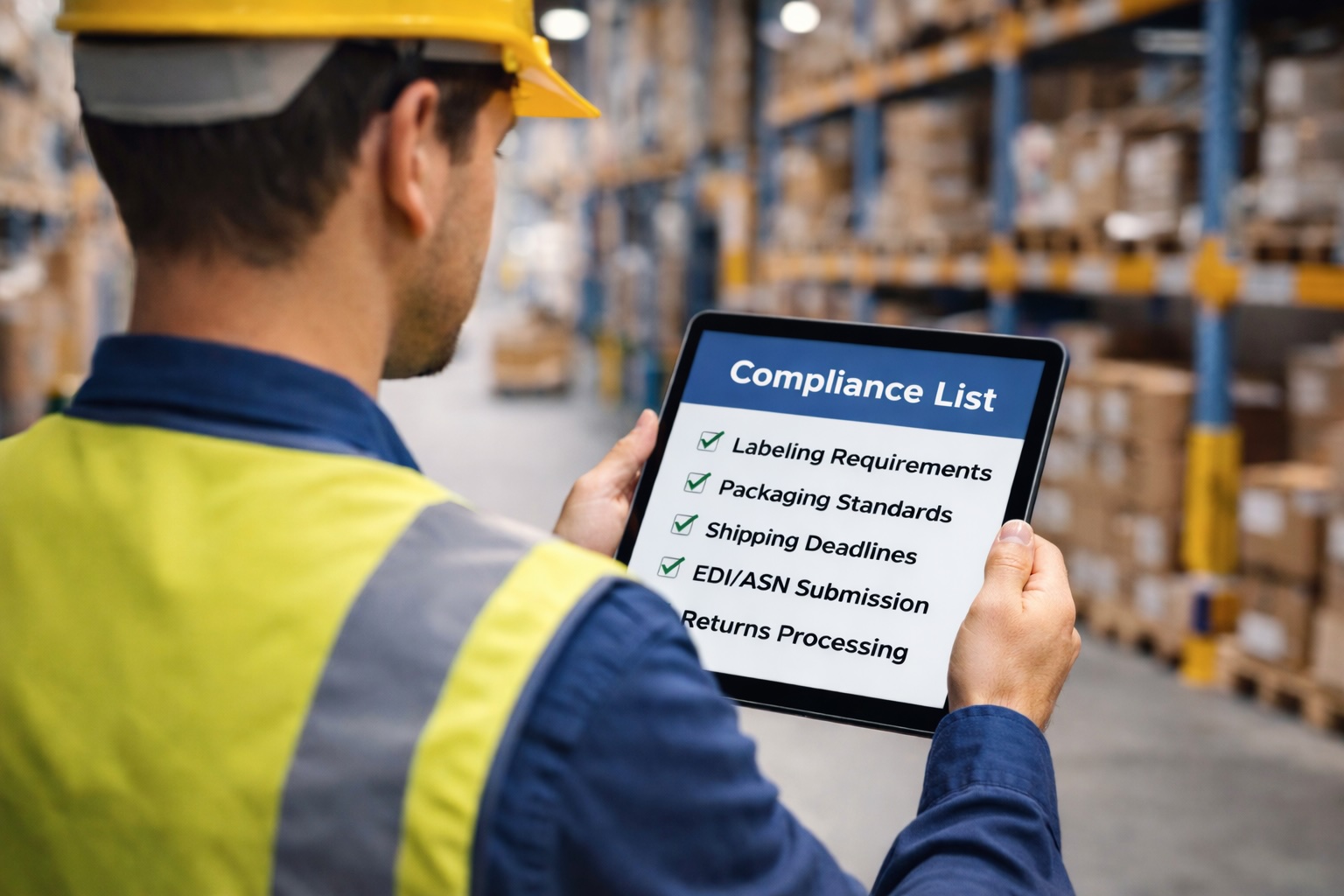
Although FTZs offer financial advantages, they come with strict compliance rules. Manual processes introduce risk in several ways.
Heavy documentation requirements
Companies must maintain accurate admission numbers, zone statuses, and customs classification codes. Errors can lead to penalties or delays.
Slow approval workflows
Receiving cannot be approved unless all bonded information is validated. Without automation, this becomes a bottleneck.
Vulnerability to compliance violations
Mixing bonded and domestic goods or missing customs fields exposes companies to significant financial risk.
Limited visibility
Many systems do not track FTZ data natively, which forces teams into manual tracking.
Manual reslotting after clearance
Once goods are cleared, they must be moved to domestic locations. Manual processes take time and create errors.
JASCI eliminates these problems by automating each step.
5. How JASCI WMS Automates FTZ Processes
JASCI’s automation begins the moment an ASN arrives and continues throughout the product lifecycle.

Automated FTZ data capture
When an ASN is received, the system captures:
Bonded receipt status
FTZ admission number
FTZ zone status
This ensures that FTZ details follow the inventory at every stage.
Compliance validation before approval
If a receipt is bonded, JASCI verifies that all required information is complete. If anything is missing, the system stops approval and prompts users to update records.
Automatic clearance and reslotting
Once FTZ information is updated and validated, JASCI reslots inventory automatically. Bonded items move to the correct zone, and cleared items shift to domestic storage.
Real-time audit visibility
Every movement is logged. Companies can answer customs audits instantly with complete data.
Integration with ERP and compliance systems
Webhooks update financial and customs partners in real time to ensure accurate reporting.
6. Financial Benefits of FTZ Automation
The financial value of FTZs becomes much stronger when automation removes manual overhead.

Stronger cash flow
Duty deferral allows companies to hold inventory without tying up cash. This improves liquidity and financial planning.
Duty elimination on exports
Goods shipped to international destinations avoid domestic duties entirely.
Lower landed costs
Tariff inversion and duty strategies reduce total cost of goods.
Reduced labor costs
Automation eliminates manual reviews, data entry, and compliance checks.
Lower risk of penalties
Compliance errors are prevented at the source, protecting companies from costly fines.
Faster warehouse operations
Automated clearance and reslotting increase throughput and reduce processing time.
7. Why JASCI’s Approach Is Different
JASCI integrates FTZ tracking into the core WMS, not as an add-on. This creates significant advantages.
One system for compliance and operations
FTZ data moves with inventory through every step.
SmartTask automation
Workflows enforce compliance and eliminate manual errors.
Real-time updates
ERP, finance, and customs partners stay in sync.
Designed for scale
High-volume operations remain accurate and compliant.
8. Conclusion
Foreign Trade Zones offer powerful financial advantages, but only when companies can manage compliance with accuracy and speed. JASCI WMS delivers this by automating the entire FTZ process. From receiving to reslotting to export, the system ensures compliance, accelerates operations, and unlocks new financial value.
Companies that adopt JASCI’s FTZ automation reduce cost, improve cash flow, and gain a strategic advantage in global supply chain performance.
FAQ: Foreign Trade Zones
1. What is a Foreign Trade Zone?
A Foreign Trade Zone is a secure area where companies can store, process, or manufacture imported goods without paying duties until the goods enter the domestic market.
2. How does an FTZ help reduce import costs?
FTZs allow duty deferral, duty elimination on re-exports, and tariff inversion when the duty rate on finished goods is lower than on raw materials.
3. What is duty deferral in an FTZ?
Duty deferral means companies do not pay import duties until merchandise leaves the FTZ and enters U.S. commerce, improving cash flow and reducing upfront costs.
4. What type of inventory qualifies for FTZ status?
Imported goods, bonded shipments, components, finished products, and re-exported merchandise can all qualify for FTZ processing.
5. What is bonded receiving?
Bonded receiving is the process of accepting imported goods under customs control before duties are paid. These goods must be tracked and approved before use.
6. How does JASCI WMS support FTZ operations?
JASCI automates FTZ data capture, bonded approval, inventory tracking, reslotting after clearance, and audit reporting, removing manual work and reducing risk.
7. Does an FTZ reduce customs paperwork?
Yes. FTZs allow weekly entry filings, fewer customs transactions, and simplified documentation, which reduces administrative workload.
8. Can FTZs eliminate duties entirely?
Yes, when goods are re-exported directly from an FTZ or when tariff inversion applies.
9. Is compliance difficult in an FTZ?
Compliance is complex when done manually. Accurate tracking of bonded status, admission numbers, and customs documentation is required for every movement.
10. Does JASCI help maintain FTZ compliance?
Yes. JASCI maintains a complete audit trail, validates bonded details before approval, prevents mistakes, and ensures accurate reporting for customs.
11. Who should use a Foreign Trade Zone?
Importers, manufacturers, 3PLs, e-commerce brands, and companies that store or process high-volume imported goods benefit most from FTZ programs.
12. Do FTZs speed up warehouse operations?
Yes. Automated bonded approval and clearance workflows help warehouses move goods faster and with fewer manual checks.